
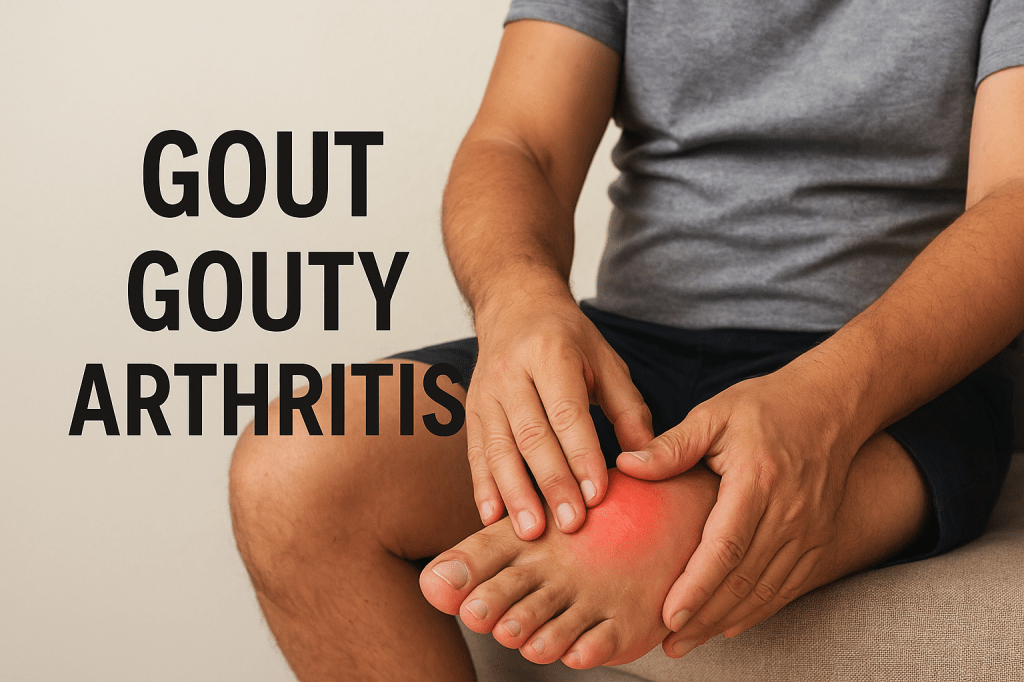
Gout is one of the oldest known forms of arthritis and yet continues to trouble people worldwide. It often strikes suddenly with severe joint pain, usually in the big toe, but it can affect ankles, knees, wrists, and elbows too. If left untreated, gout can progress to gouty arthritis, a chronic and damaging form of the disease.
Understanding its symptoms, home remedies, and when to seek professional help from an orthopedic surgeon or a rheumatologist is crucial for long-term joint health.
What Is Gout?
Gout is a type of inflammatory arthritis caused by excess uric acid in the blood. When uric acid levels rise, crystals form in the joints, leading to pain, swelling, and redness.
Uric acid rises in the body when either too much is produced or too little is removed by the kidneys.
Overproduction: Eating purine-rich foods (red meat, organ meat, seafood), drinking alcohol or sugary drinks, obesity, certain cancers, or high cell turnover.
Under-excretion: Kidney problems, dehydration, certain medicines (like diuretics, aspirin), and metabolic disorders.
The imbalance causes uric acid to accumulate, forming crystals in joints → leading to gout attacks.
Trigger factors: Rich diet, alcohol, obesity, kidney problems, family history. At-risk people: Middle-aged men, postmenopausal women, and those with lifestyle-related disorders.
Signs and Symptoms of Gout & Gouty Arthritis
Sudden, intense joint pain (commonly at night) Swelling and warmth in the affected joint Red or shiny skin around the joint Limited movement during a flare-up Repeated attacks may lead to tophi (hard uric acid deposits under skin) and joint deformities
Investigations for Gout
Your doctor may recommend:
Blood test – to check uric acid levels Joint fluid analysis – to look for urate crystals X-ray/Ultrasound – to detect joint damage or deposits Kidney function tests – since uric acid is excreted via kidneys
Home Remedies for Gout Relief
While home remedies cannot cure gout, they may help reduce flare-ups and pain:
Hydration: Drink plenty of water to flush uric acid. Diet changes: Limit red meat, organ meat, seafood, and alcohol. Prefer low-fat dairy, whole grains, vegetables, and cherries. Weight management: Even moderate weight loss can reduce gout risk. Cold compress: Applying ice packs helps with swelling and pain. Rest & elevation: Keep the affected joint elevated during an attack. Avoid sugary drinks: Fructose-rich sodas and juices increase uric acid levels.
When to Consult an Orthopedic Surgeon or Rheumatologist
Self-care is not enough if:
Attacks are frequent or severe Pain does not improve with simple measures There is joint stiffness, deformity, or loss of function You notice lumps (tophi) around joints or ears You have kidney stones along with gout First-time attacks with severe swelling should always be evaluated Orthopedic surgeon and Rheumatologist: Best for medical management, uric acid control, and long-term therapy. Surgical care is Essential if gout has caused joint damage, deformities, or you need surgical intervention for advanced arthritis.
Treatment Line by Specialists
Acute gout attacks: Painkillers, colchicine, or anti-inflammatory medicines. Long-term management: Uric acid–lowering drugs (allopurinol, febuxostat), lifestyle changes, and regular monitoring. Surgical options (Orthopedics): Removal of large tophi, joint preservation, or joint replacement if damage is severe.
Takeaway
Gout may start as an occasional painful episode but can turn into a disabling arthritis if ignored. Simple home remedies like hydration, diet control, and weight management can help, but they do not replace medical treatment.
If you experience recurrent painful attacks, swelling, or deformity, consult an orthopedic surgeon or rheumatologist early. Timely care can save your joints and prevent long-term disability.
About the Author
Dr. Om Parshuram Patil, popularly known as SpineWala, is a renowned orthopedic spine surgeon based in Mumbai. With expertise in minimally invasive and endoscopic spine surgeries, he is dedicated to improving spine health and spreading awareness about posture, lifestyle, and bone-joint care. Alongside his medical practice, Dr. Patil actively writes patient-friendly blogs on spine, joint, and musculoskeletal conditions to educate the public and promote holistic well-being.
To book and consult with Dr Om Patil
9819191896/ 9819195885
 Spinewala Blog