
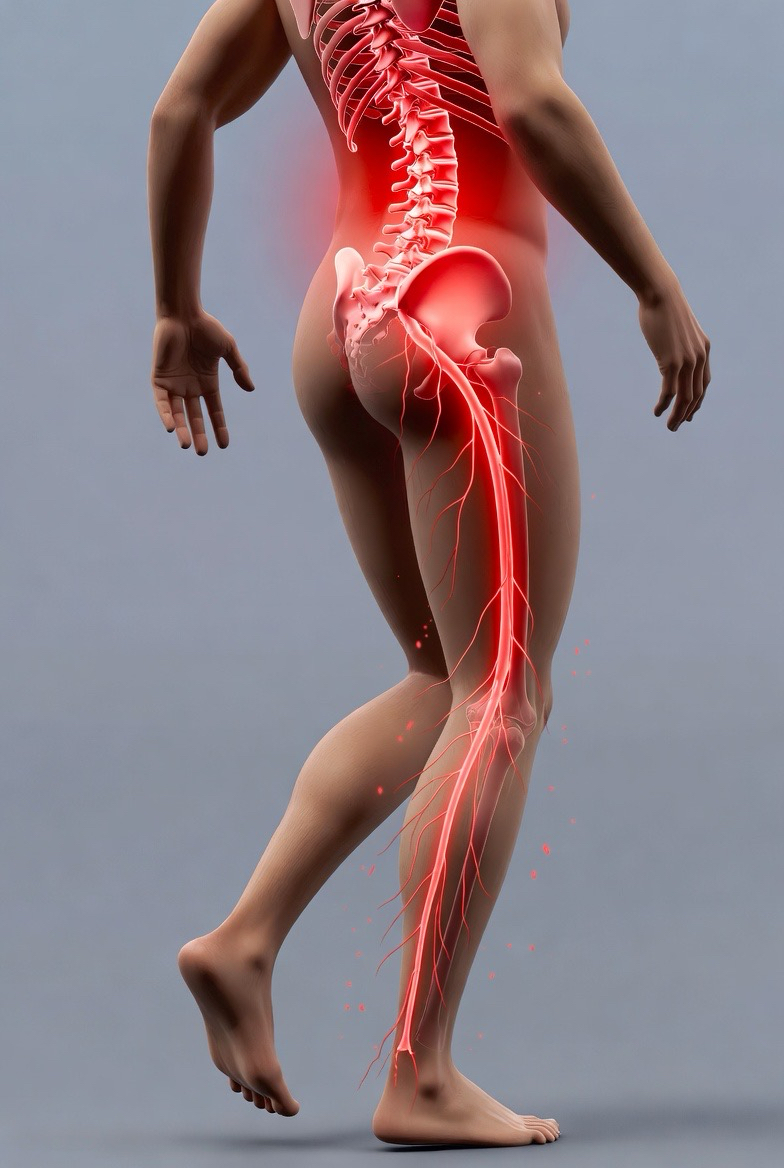
The New Work-From-Anywhere Epidemic: Sciatica in Digital Workers
As India revisits remote work and hybrid work culture in response to rising fuel costs and global geopolitical tensions, including the ongoing Iran–USA–Israel conflict, Prime Minister Narendra Modi has encouraged work-from-home practices to reduce fuel consumption and dependency on imported petroleum.
While work-from-home (WFH), digital nomadism, and remote entrepreneurship offer flexibility and reduced commuting stress, they have also quietly created a massive health issue:
“Desk-Induced Low Back Pain and Sciatica”
Thousands of professionals now spend:
- 8–14 hours sitting
- Working from couches, beds, cafés, airports, or kitchen chairs
- Using laptops without ergonomic support
- Sitting continuously without movement
And the body eventually reacts.
One of the earliest warning signs is:
Tingling in the Leg While Sitting
That tingling, numbness, burning sensation, or electric shock traveling from the lower back into the buttock, thigh, calf, or foot may indicate:
- Sciatica
- Nerve compression
- Piriformis syndrome
- Lumbar disc bulge
- Postural spinal overload
- Reduced blood circulation
- Early lumbar canal narrowing
Why Does Sitting for Long Hours Trigger Sciatica?
Your lumbar spine is not designed for prolonged static sitting.
When you sit continuously:
- Pressure inside spinal discs increases
- Hip flexors tighten
- Core muscles weaken
- Hamstrings stiffen
- Glute muscles switch off
- Lumbar lordosis collapses
- Sciatic nerve tension increases
Over time, this can irritate or compress the sciatic nerve.
Common Symptoms in Remote Workers
Early Symptoms
- Tingling in calf or foot
- Pins and needles sensation
- Tight hamstrings
- Mild low back stiffness
- Buttock pain after long sitting
Progressive Symptoms
- Burning leg pain
- Electric shock sensation
- Pain while getting up from chair
- Numbness in toes
- Weakness in ankle or foot
Red Flag Symptoms
Seek urgent medical attention if you develop:
- Loss of bladder or bowel control
- Severe leg weakness
- Difficulty walking
- Numbness in groin region
- Progressive worsening pain
Why WFH Workers Are at Higher Risk
1. No Natural Movement
Office environments at least force:
- Walking to meetings
- Commuting
- Stair climbing
- Social movement
WFH often means:
Bed → Chair → Sofa → Laptop → Sleep
Minimal spinal mobility.
2. Laptop Posture Is Destroying Your Spine
Working on laptops causes:
- Forward head posture
- Rounded shoulders
- Slouched lumbar spine
- Neck flexion
- Increased disc pressure
This significantly increases stress on lumbar discs.
3. Sitting Is Worse Than Standing
Research consistently shows prolonged sitting increases lumbar disc pressure more than standing.
The worst position:
Slouched sitting with forward bending
Exactly how most people work from couches or beds.
The “Nomad Spine Syndrome”
Digital nomads and freelancers often work from:
- Airports
- Hostels
- Coffee shops
- Bean bags
- Beds
- Sofas
These environments lack:
- Lumbar support
- Correct desk height
- Hip alignment
- Proper monitor positioning
Result:
- Chronic muscle fatigue
- Disc strain
- Nerve irritation
- Early degeneration
How to Know if Your Tingling Is Sciatica
Common Signs of Sciatica
Pain or tingling that:
- Starts in lower back or buttock
- Travels below knee
- Increases while sitting
- Improves on walking
- Worsens after long drives
- Occurs during coughing or sneezing
The 4-Hour Sitting Danger Zone
After approximately 4 continuous hours:
- Blood circulation drops
- Muscles fatigue
- Nerve gliding decreases
- Spinal disc hydration changes
- Nerve compression increases
Your body starts sending warning signals.
Tingling is one of them.
10 Spine-Saving Rules for WFH Professionals
1. Never Sit More Than 30–40 Minutes Continuously
Set alarms.
Stand.
Stretch.
Walk.
Even 2 minutes helps.
2. Use a Proper Chair
Ideal chair:
- Lumbar support
- Hips slightly above knees
- Feet flat
- Elbows at 90°
Avoid:
- Beds
- Sofas
- Bean bags
3. Raise Laptop Screen to Eye Level
Use:
- Laptop stand
- Books
- External monitor
Your neck should stay neutral.
4. Use External Keyboard and Mouse
This dramatically improves posture.
5. Start “Micro Mobility Breaks”
Every hour:
- Back bends ×10
- Hamstring stretch
- Walking
- Deep breathing
6. Strengthen Your Core
Weak core muscles overload spinal discs.
Key exercises:
- McGill curl-up
- Bird dog
- Side plank
- Glute bridges
7. Hydrate Well
Discs require hydration.
Dehydration worsens disc stress.
8. Walk Daily
Minimum:
- 6000–8000 steps/day
Walking nourishes spinal discs.
9. Sleep Matters
Poor sleep increases:
- Muscle tightness
- Pain sensitivity
- Inflammation
10. Do Not Ignore Persistent Tingling
Especially if symptoms:
- Last >2 weeks
- Worsen progressively
- Cause weakness
Early treatment prevents surgery in many cases.
Can Sciatica Heal Without Surgery?
Yes — many cases improve with:
- Ergonomic correction
- Physiotherapy
- Movement therapy
- Weight reduction
- Core strengthening
- Anti-inflammatory treatment
- Activity modification
However, some patients with:
- Large disc prolapse
- Severe nerve compression
- Progressive weakness
- Cauda equina syndrome
may require minimally invasive or endoscopic spine surgery.
The Future of Work Must Include Spine Health
Remote work is likely to remain part of India’s economic and energy strategy as fuel conservation becomes increasingly important amid global instability.
But productivity without spinal health comes at a price.
The next generation of professionals must understand:
Your spine is your real workstation.
Not your laptop.
Not your Wi-Fi.
Not your office.
Final Message for Digital Workers
If your leg tingles after sitting for hours, your body is not “getting old.”
It is asking for:
- Movement
- Better posture
- Ergonomics
- Core strength
- Spinal care
Ignoring early warning signs can convert reversible irritation into chronic nerve damage.
WFH can save fuel for the nation —
but your spine still needs daily maintenance.
About the Author
Dr. Om Patil – Endoscopic Spine Surgeon, Mumbai
Founder: SpineWala – “Your Back In Action”


🌐 Endospineworld.com
🌐 Spinewala.com
📞 9819191896 / 9819195885 / 9819195150
📍 Dadar East, Mumbai
📍 Chembur East, Mumbai
 Spine Surgeons Notes
Leave a comment