
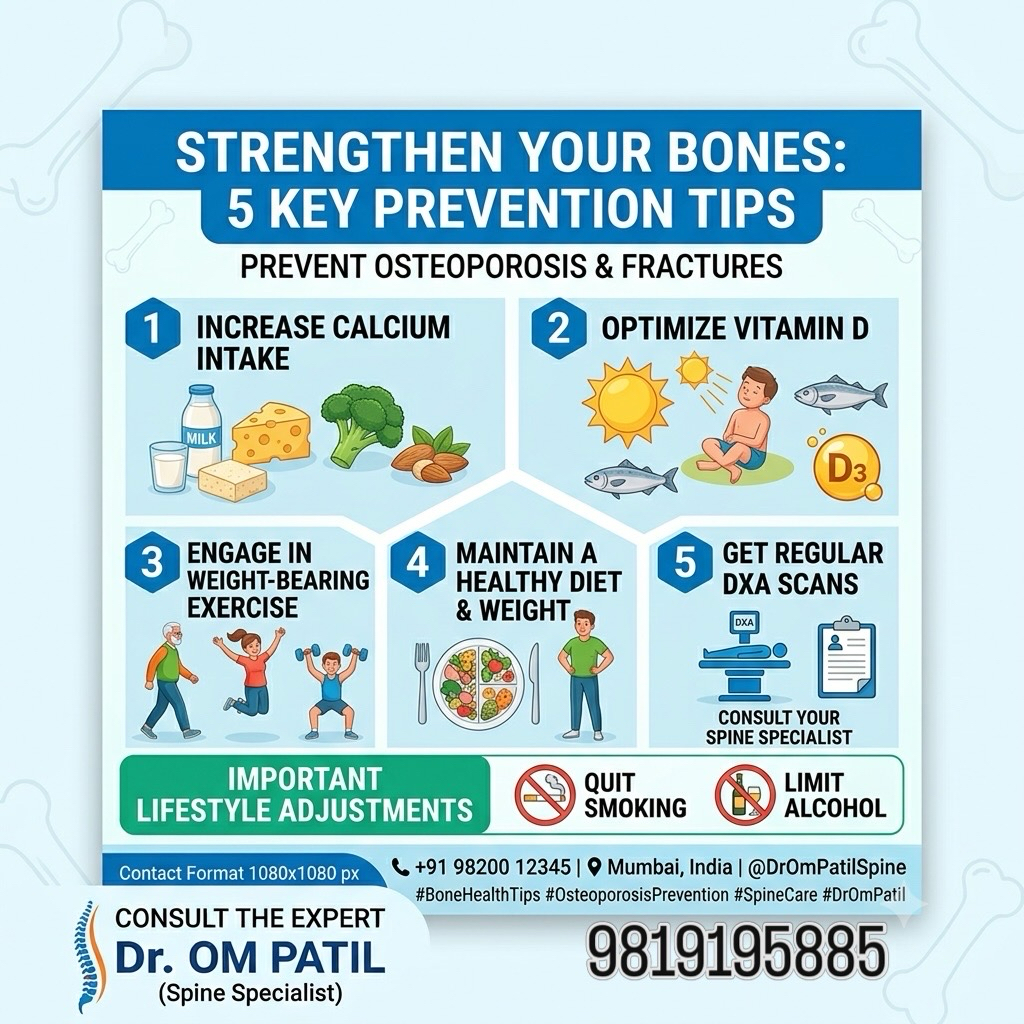
World Osteoporosis Day serves as a critical clinical reminder that the human skeleton is not a static scaffold; it is highly active, living tissue. Often called the “silent disease,” osteoporosis progressively compromises bone density and microarchitecture, turning once-robust bones into fragile structures.
For a spine surgeon, the consequences of this disease are seen firsthand. The vertebral bodies of the spine are particularly vulnerable to bone density loss, leading to structural collapse and debilitating pain. At SpineWala, our protocol for combating osteoporosis goes beyond basic calcium supplements, integrating advanced physiological principles and targeted interventions to fortify your structural foundation.
The Physiology of Bone Remodeling
Bone density is dictated by the ongoing physiological tug-of-war between osteoclasts (cells that break down old bone) and osteoblasts (cells that build new bone). In osteoporosis, the breakdown outpaces the rebuilding. Reversing or halting this process requires sending the right physiological signals to your body.
Mechanical Loading: Bone tissue adapts directly to the physical demands placed upon it (Wolff’s Law). Progressive resistance training and weight-bearing exercises signal the central nervous system to upregulate osteoblast activity, actively increasing bone mineral density.
Nutritional Synergies: Calcium alone is insufficient. The physiological optimization of bone health requires Vitamin D3 to absorb calcium from the gut, and critically, Vitamin K2 to direct that calcium into the bone matrix rather than allowing it to calcify in the arteries. Magnesium and adequate dietary protein are also essential structural co-factors.
Hormonal and Sleep Optimization: Bone remodeling is heavily influenced by systemic hormones (like estrogen and testosterone) and occurs optimally during deep, restorative sleep. Chronic stress and sleep deprivation elevate cortisol, which directly inhibits bone formation.
The Spinal Impact: Compression Fractures
When osteoporosis targets the spine, the result is often a vertebral compression fracture. Unlike a broken arm resulting from a fall, osteoporotic spinal fractures can occur from mundane daily activities—sneezing, bending to tie a shoe, or lifting a light bag of groceries.
Signs of a Spinal Compression Fracture:
Sudden, severe onset of localized back pain.
Pain that worsens when standing or walking and relieves when lying down.
A progressive loss of overall height.
The development of a stooped, forward-leaning posture (kyphosis).
Modern Clinical Solutions
The primary goal is proactive prevention. However, when a vertebral compression fracture does occur, suffering through weeks of debilitating pain is no longer the standard of care.
For acute, painful fractures that do not respond to conservative physiological management, minimally invasive procedures like vertebroplasty or kyphoplasty offer rapid relief. Through a tiny incision, medical-grade bone cement is carefully injected into the collapsed vertebra, instantly stabilizing the micro-fractures, restoring vertebral height, and significantly reducing pain.
Protect Your Structural Integrity
Osteoporosis does not have to be an inevitable part of aging. With precise physiological protocols and expert clinical oversight, you can protect your spine. If you are experiencing sudden back pain or have concerns about your bone density, an expert evaluation is essential. At SpineWala, Dr. Om Patil provides comprehensive, specialized care in Mumbai to diagnose, manage, and definitively treat osteoporotic spinal conditions, keeping you active and structurally sound.


Leave a Reply