
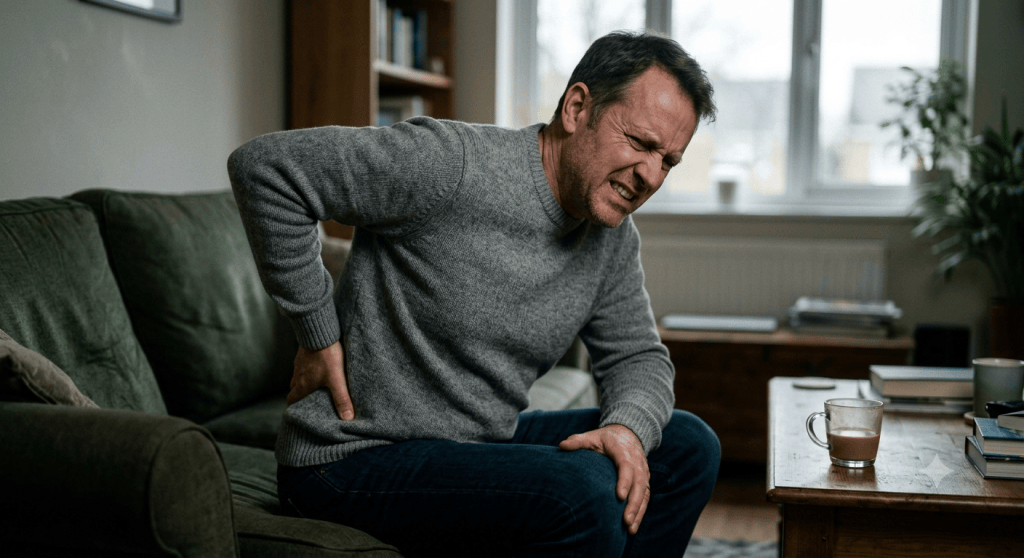
Back Pain: What the Latest Research Really Says
Back pain is one of the most common health problems in the world—and one of the most misunderstood.
For many people, back pain immediately raises concerns about a “slipped disc,” spinal degeneration, MRI abnormalities, or the possibility of surgery. But modern research tells a more nuanced story.
Most back pain does not come from a single structural abnormality, and finding something abnormal on an MRI does not necessarily mean that it is the cause of pain.
At the same time, dismissing all back pain as “muscular” or telling every patient simply to exercise is equally inappropriate. Some patients have nerve compression, fractures, infection, inflammatory disease, tumour, or other conditions requiring specific treatment.
The key is accurate diagnosis, appropriate investigation, active rehabilitation, and timely specialist intervention when necessary.
As an Orthopaedic Spine Surgeon specialising in minimally invasive and endoscopic spine surgery in Mumbai, my approach is to identify the actual pain pattern, correlate clinical findings with imaging, and choose the least invasive treatment that is appropriate for the individual patient.
How Common Is Back Pain?
The global burden of low back pain is enormous.
The Global Burden of Disease (GBD) study estimated that approximately 619 million people were living with low back pain in 2020. Low back pain remained the world’s leading cause of years lived with disability. The researchers projected that the number could reach approximately 843 million people by 2050, driven largely by population growth and ageing. (The Lancet)
More recent GBD-2021 analyses estimated approximately 628.8 million people with low back pain in 2021. Importantly, while age-standardised rates have generally declined modestly, the absolute number of people affected continues to rise because the world’s population is growing and ageing. (PubMed Central (PMC))
This distinction is important:
Back pain is not necessarily becoming more common in every age group—but there are more people living with it.
What About India?
Back pain is also a major health problem in India.
A systematic review involving 97 studies estimated pooled point prevalence of low back pain at approximately 48%, annual prevalence at 51%, and lifetime prevalence at 66% in India. Prevalence was particularly high among women, rural populations and people involved in physically demanding occupations. (PubMed)
India’s rapidly changing occupational environment creates an interesting combination of risks: physical labour remains common, while prolonged sitting, sedentary lifestyles, obesity and reduced physical activity are increasingly prevalent.
Therefore, the modern Indian patient may develop back pain from very different combinations of physical, occupational, lifestyle and biological factors.
Is Back Pain Always Caused by a Disc?
No.
This is perhaps one of the most important messages from modern back-pain research.
Low back pain can arise from multiple structures and mechanisms, including muscles, ligaments, facet joints, intervertebral discs, sacroiliac structures and neural tissues. In many patients, however, a single specific anatomical pain generator cannot be confidently identified.
International evidence and clinical guidelines therefore distinguish between specific low back pain—where an identifiable condition is responsible—and non-specific low back pain, where no single structural cause can be established.
This does not mean that the patient’s pain is imaginary.
It means that pain is a complex biological experience involving tissues, nerves, the brain, movement, sleep, stress, physical conditioning and other factors.
Your MRI May Not Be the Cause of Your Pain
MRI has revolutionised spine diagnosis.
It allows us to see discs, nerves, the spinal canal, foramina, vertebral structures and other tissues in remarkable detail.
But there is a major problem:
Abnormal findings are common even in people without symptoms.
Disc degeneration, disc bulges, protrusions and other age-related changes can occur as part of normal ageing.
Therefore:
An abnormal MRI does not automatically equal an abnormal patient.
The correct clinical question is not:
“What abnormality is present on the MRI?”
It is:
“Does the MRI abnormality explain the patient’s symptoms and clinical examination?”
This distinction is fundamental to responsible spine care.
Routine imaging for uncomplicated low back pain is therefore generally discouraged when there are no red flags or neurological indications. Evidence-based guidelines emphasise history and examination first, with imaging reserved for situations where it is likely to change management. (PubMed)
When Is an MRI Actually Necessary?
MRI becomes much more valuable when the clinical situation suggests a specific structural problem.
Examples include:
- Progressive neurological weakness
- Persistent or severe radicular pain
- Suspected significant nerve compression
- Suspected spinal infection
- Suspected tumour
- Significant trauma
- Suspected vertebral fracture
- Symptoms suggesting cauda equina syndrome
- Persistent symptoms despite appropriate conservative treatment when intervention is being considered
MRI is particularly important before many spine procedures because it allows the surgeon to understand the anatomy and identify the pathology responsible for neural compression.
The goal should therefore not be “MRI for everyone.”
It should be:
“The right MRI for the right patient at the right time.”
Red Flags: When Back Pain Needs Urgent Attention
Although most back pain is not caused by dangerous disease, some presentations require urgent evaluation.
Important warning symptoms include:
- New bladder or bowel dysfunction
- Saddle-area numbness
- Progressive or severe limb weakness
- Fever associated with severe back pain
- Significant unexplained weight loss
- History of cancer with new severe back pain
- Significant trauma
- Severe pain in a patient at high risk of fracture
- Immunosuppression or other risk factors for spinal infection
These symptoms do not automatically mean that a serious condition is present—but they should not be ignored.
Does Exercise Help Back Pain?
Yes—exercise is one of the most consistently supported approaches for managing chronic non-specific low back pain.
A large systematic review found that exercise therapy can improve pain and functional limitations in adults with chronic low back pain. (PubMed)
Exercise should not be viewed as a single prescription.
The appropriate program depends on the individual’s age, symptoms, physical capacity, neurological status, previous activity level and goals.
Potential components include:
- Walking
- Strength training
- Core conditioning
- Mobility exercises
- Aerobic exercise
- Motor-control exercises
- Progressive resistance training
- Functional rehabilitation
The objective is not simply to “strengthen the back.”
It is to gradually restore capacity, confidence and function.
Should You Stop Moving When Your Back Hurts?
Usually, prolonged inactivity is not the answer.
Interestingly, a 2025 prospective cohort study examined objectively measured walking and the risk of chronic low back pain. (JAMA Network)
Another 2025 study investigated common physical activities in people with low back pain. Although some activities were associated with transient increases in flare risk, the study found no significant association between these activities and worse functional outcomes at one year. The findings support allowing people with low back pain to remain physically active within appropriate limits rather than avoiding normal activity out of fear. (JAMA Network)
This supports an important modern principle:
Movement should generally be restored progressively rather than avoided indefinitely.
However, this does not mean that every painful movement should be forced. Acute severe symptoms, neurological deficits and specific structural conditions require individualised advice.
Is Bed Rest Good for Back Pain?
For most uncomplicated back pain, prolonged bed rest is not desirable.
Reduced activity may be appropriate briefly during severe acute symptoms, but prolonged inactivity can contribute to:
- Muscle deconditioning
- Reduced physical capacity
- Fear of movement
- Loss of confidence
- Reduced participation in daily activities
The modern approach is generally to encourage safe, progressive activity rather than prolonged immobilisation.
What Role Does Body Weight Play?
Body weight is one of several factors associated with the burden of low back pain.
The GBD analysis identified high BMI, smoking and occupational factors among important potentially modifiable contributors to disability associated with low back pain. Together, these factors accounted for approximately 38.8% of low-back-pain years lived with disability in the 2020 analysis. (PubMed)
This does not mean that every person with back pain who is overweight should simply be told to lose weight.
A better approach is to consider weight management as part of overall spinal and metabolic health.
What About Sitting?
Sitting is often blamed for back pain.
But the relationship is more complicated than:
“Sitting = disc damage.”
Prolonged static postures, inadequate physical conditioning and insufficient movement may contribute to symptoms in some individuals.
Rather than searching for one “perfect posture,” it is often more useful to develop postural variability.
Change position.
Stand periodically.
Walk.
Strengthen your muscles.
Build tolerance to sitting, standing and other activities progressively.
Your spine is designed for movement.
Does Stress Really Affect Back Pain?
Yes.
Chronic pain is influenced by biological, psychological and social factors.
Sleep problems, stress, anxiety, depression, fear of movement and catastrophising can influence pain intensity and disability.
This does not mean that back pain is “all in your head.”
The pain is real.
It means that the nervous system does not operate independently of the rest of the body.
Successful chronic pain treatment may therefore require more than treating the spine itself. Education, exercise, rehabilitation, sleep optimisation and psychological strategies can be important components of recovery.
What Treatments Actually Help?
The evidence increasingly supports an active, multimodal approach.
Depending on the individual patient, treatment may include:
Education
Understanding the condition can reduce fear and improve confidence in movement.
Exercise
A structured exercise program is one of the cornerstones of treatment for chronic non-specific low back pain.
Physiotherapy
Physiotherapy can help improve mobility, strength, motor control and functional capacity.
Medicines
Medications may have a role in selected patients, but they should be prescribed according to the individual’s clinical situation, contraindications and risk profile.
Psychological and behavioural interventions
For chronic pain, approaches such as cognitive behavioural therapy and other pain-management strategies may be useful components of multidisciplinary care.
Selected injections
Epidural or other image-guided injections may be appropriate in selected patients, particularly when there is radicular pain associated with nerve-root inflammation or compression.
They should not be viewed as a universal treatment for back pain.
What About Alternative Treatments?
Some non-pharmacological approaches can provide benefit for selected patients.
For example, a 2025 randomised clinical trial involving 800 older adults with chronic low back pain found that acupuncture improved pain-related disability at six and twelve months compared with usual care. Additional maintenance acupuncture did not provide a statistically discernible additional benefit. (JAMA Network)
The lesson is not that one treatment works for everyone.
It is that chronic back pain often requires an individualised treatment strategy, and some patients may benefit from combining conventional rehabilitation with selected complementary approaches.
When Does Back Pain Require Surgery?
Most back pain does not require surgery.
Surgery becomes more relevant when there is a clearly identifiable structural problem that correlates with symptoms and when the expected benefits outweigh the risks.
Examples include:
- Significant nerve compression causing persistent disabling radicular pain
- Progressive neurological deficit
- Severe spinal stenosis with appropriate symptoms
- Certain cases of instability or spondylolisthesis
- Spinal fracture requiring stabilisation
- Tumour or infection
- Cauda equina syndrome
- Other structural conditions where non-operative management is unlikely to provide adequate relief
The decision should never be based on an MRI report alone.
What About Sciatica?
Sciatica is different from ordinary mechanical or non-specific low back pain.
It generally refers to pain caused by irritation or compression of a lumbosacral nerve root.
Common causes include:
- Lumbar disc herniation
- Lateral recess stenosis
- Foraminal stenosis
- Lumbar canal stenosis
- Spondylolisthesis
A patient with severe radiating leg pain, numbness or weakness requires a more focused neurological assessment.
When a specific nerve is compressed and symptoms correlate with imaging, targeted treatment—including surgery in appropriately selected patients—may provide substantial benefit.
Where Does Endoscopic Spine Surgery Fit?
Modern spine surgery is increasingly focused on achieving adequate neural decompression while minimising tissue disruption.
Full-endoscopic spine surgery is one of the minimally invasive techniques available for selected spinal conditions.
Depending on the pathology and anatomy, procedures may be performed through:
- Transforaminal approaches
- Interlaminar approaches
Potential advantages in appropriately selected patients include smaller access corridors, limited soft-tissue disruption, direct endoscopic visualisation and earlier mobilisation.
However, “minimally invasive” does not mean “appropriate for everyone.”
The surgical approach must be selected according to:
Pathology + level + anatomy + neurological findings + previous surgery + patient factors + surgeon expertise.
The best operation is not necessarily the smallest operation.
The best operation is the least invasive operation that can safely accomplish the required objective.
Can Back Pain Be Prevented?
Not all back pain can be prevented.
Disc degeneration and other age-related changes are part of biology.
However, several strategies may support spinal health:
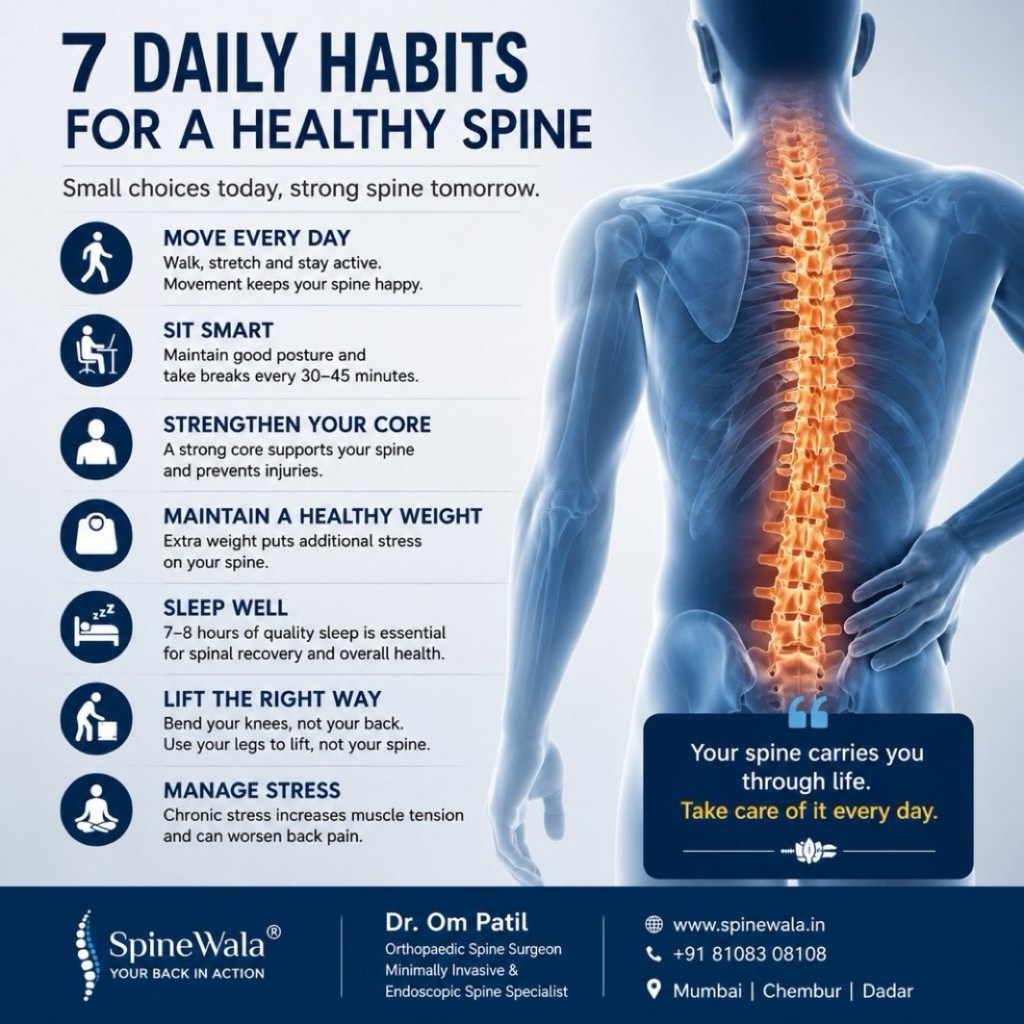
- Maintain regular physical activity
- Develop adequate muscle strength
- Maintain a healthy body composition
- Avoid smoking
- Sleep adequately
- Build physical capacity gradually
- Avoid unnecessary prolonged inactivity
- Use appropriate lifting strategies
- Address occupational ergonomic problems
- Seek medical assessment when symptoms are persistent or progressive
Prevention should focus less on fear of movement and more on building a resilient body.
Five Back-Pain Myths—And What Research Says
Myth 1: “Every back pain needs an MRI.”
False.
Routine imaging is generally not recommended for uncomplicated low back pain without red flags or neurological indications. (PubMed)
Myth 2: “A disc bulge means I need surgery.”
False.
Disc abnormalities can be found in people without symptoms. The clinical examination and symptom pattern must correlate with imaging.
Myth 3: “Rest is the best treatment.”
Usually false.
Progressive physical activity and rehabilitation are generally more beneficial than prolonged inactivity.
Myth 4: “Back pain means my spine is weak.”
Not necessarily.
Pain does not automatically mean structural weakness. Many factors contribute to pain.
Myth 5: “Surgery is always the last resort.”
Too simplistic.
Surgery should not be performed unnecessarily, but when there is progressive neurological deficit or significant structural nerve compression causing persistent disabling symptoms, delaying appropriate surgery can also be harmful.
The correct question is not:
“Can we avoid surgery at all costs?”
It is:
“Does this patient have a problem for which surgery is likely to provide meaningful benefit?”
My Approach to Back Pain at SpineWala®
At SpineWala®, my approach is based on five principles:
1. Listen to the patient
The history often provides the first clues to the source of pain.
2. Examine before imaging
Neurological and musculoskeletal examination helps determine whether the symptoms are mechanical, radicular, neurological or potentially related to another condition.
3. Use imaging selectively
MRI and other investigations should answer a clinical question rather than simply document age-related abnormalities.
4. Start with the least invasive appropriate treatment
Exercise, rehabilitation, education, medication and selected interventions have important roles.
5. Operate when the pathology and symptoms justify it
When surgery is necessary, minimally invasive and endoscopic techniques may be considered where appropriate.
The Future of Back-Pain Treatment
The future of spine care is unlikely to be about finding one perfect treatment for everyone.
Instead, it will increasingly involve:
- Better phenotyping of different types of back pain
- More personalised rehabilitation
- Improved understanding of pain mechanisms
- Appropriate use of imaging and biomarkers
- Better integration of physical and psychological care
- More precise minimally invasive interventions
- Improved patient education
- Shared decision-making
The enormous global burden of low back pain means that better prevention, early rehabilitation and evidence-based treatment are urgently needed.
Final Message
Back pain is common, but it should never be dismissed—and it should never automatically be treated as a surgical disease.
Most patients do not need spine surgery.
Many improve with education, activity, exercise, rehabilitation and appropriate conservative care.
But some patients have genuine structural nerve compression or other pathology where timely specialist treatment is important.
The art of modern spine care is knowing the difference.
Don’t treat the MRI. Don’t ignore the symptoms. Don’t fear movement. Don’t rush into surgery. And don’t delay surgery when there is a clear indication.
The goal is simple:
Diagnose accurately. Treat intelligently. Restore function.
About Dr. Om Patil – SpineWala®
Dr. Om Patil (SpineWala®) is an Orthopaedic Spine Surgeon in Mumbai specialising in minimally invasive and endoscopic spine surgery.
His clinical practice focuses on conditions such as back pain, sciatica, lumbar disc herniation, lumbar canal stenosis and other degenerative spinal disorders, with an emphasis on evidence-based diagnosis and personalised treatment.
SpineWala® — Your Back in Action
This article is intended for general education and does not replace an individual medical consultation. Patients with severe, persistent or progressive symptoms should undergo appropriate clinical assessment.
Selected References
- Ferreira ML, et al. Global, regional, and national burden of low back pain, 1990–2020, its attributable risk factors, and projections to 2050. The Lancet Rheumatology. 2023. (The Lancet
)
- Cheng M, et al. Global, Regional, and National Burden of Low Back Pain: Findings From the Global Burden of Disease Study 2021 and Projections to 2050. Spine. 2025. (PubMed Central (PMC)
)
- Shetty GM, et al. Prevalence of low back pain in India: A systematic review and meta-analysis. 2022. (PubMed
)
- Hayden JA, et al. Exercise therapy for chronic low back pain. Systematic review. (PubMed
)
- Suri P, et al. Risks of Common Physical Activities in People With Low Back Pain. JAMA Network Open. 2025. (JAMA Network
)
- DeBar LL, et al. Acupuncture for Chronic Low Back Pain in Older Adults. JAMA Network Open. 2025. (JAMA Network
)
- WHO. Low Back Pain Fact Sheet. (World Health Organization
)
 Spine Surgeons Notes
Leave a comment