
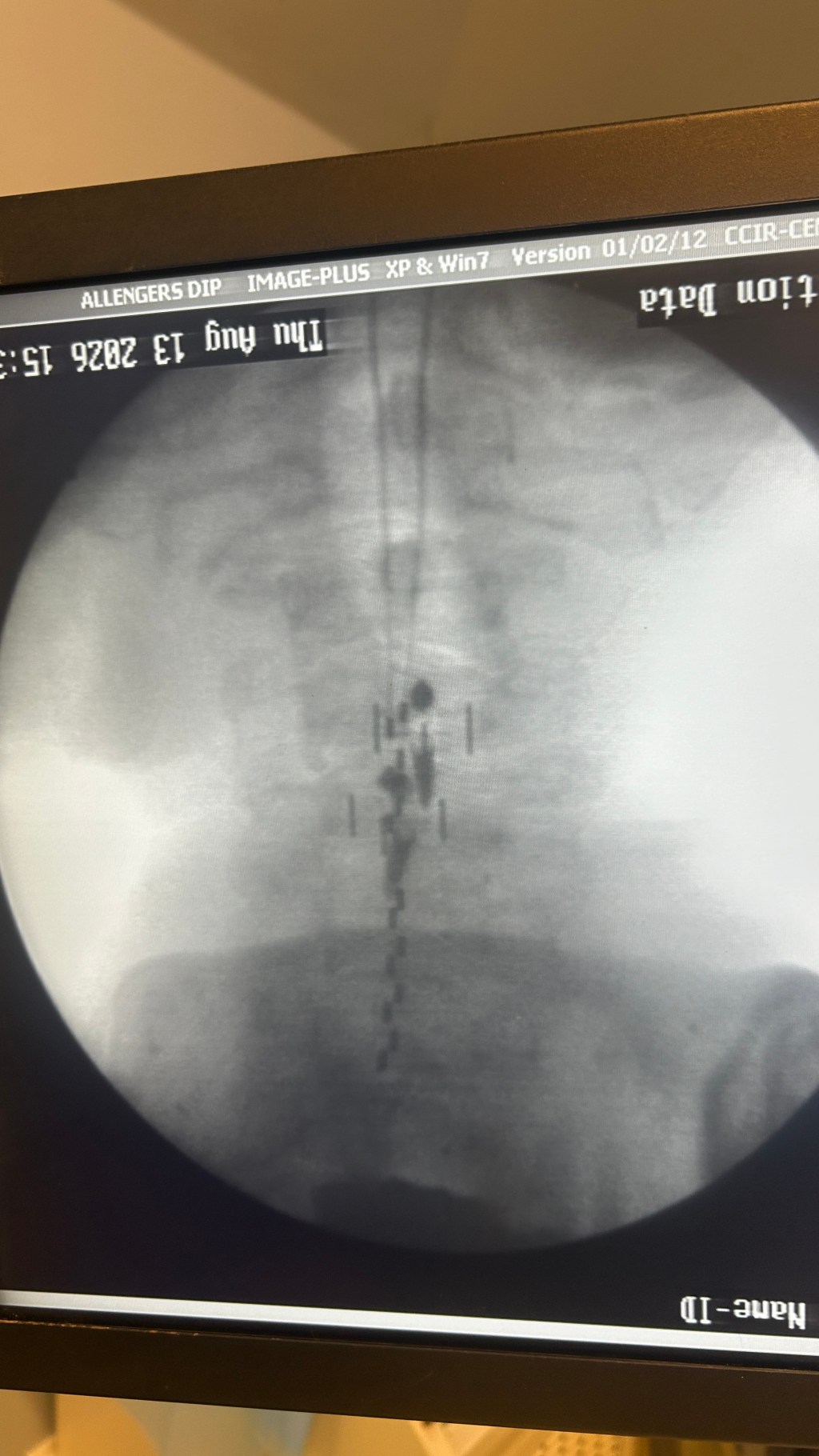
Spinal Cord Stimulator (SCS) Implantation for Chronic Pain
A Patient Guide for Chronic Back, Leg, and Nerve Pain
If you have been living with chronic pain for months or years, especially after spine surgery or nerve injury, and medicines, physiotherapy, injections, or other treatments have not provided adequate relief, Spinal Cord Stimulation (SCS) may be an option.
SCS is an advanced treatment that uses mild electrical impulses to modify the way pain signals are processed by the nervous system. It does not remove the underlying spine problem, but in carefully selected patients it can reduce pain and improve function and quality of life.
Who may benefit from SCS?
SCS may be considered for selected patients with:
- Persistent pain after spine surgery (Failed Back Surgery Syndrome / Persistent Spinal Pain Syndrome)
- Chronic neuropathic leg or back pain
- Complex Regional Pain Syndrome (CRPS)
- Selected cases of diabetic peripheral neuropathy
- Chronic radicular pain or sciatica when appropriate structural treatment has already been addressed
- Other carefully evaluated chronic neuropathic pain conditions
SCS is generally considered when appropriate conventional treatment has failed or when further corrective surgery is unlikely to provide meaningful benefit.
How does a spinal cord stimulator work?
A small electrode, called a lead, is placed in the epidural space near the spinal cord. The lead is connected to a small implantable pulse generator, usually positioned under the skin of the buttock or abdomen.
The device produces programmed electrical stimulation that changes the processing of pain signals.
Modern systems may use different stimulation technologies, including:
- Conventional stimulation
- High-frequency stimulation
- Burst stimulation
- Other advanced waveforms and programming techniques
The most appropriate system depends on the patient’s diagnosis, pain pattern, previous treatments and response to stimulation.
Why is a trial performed first?
In most patients, SCS is preceded by a temporary trial.
A temporary lead is placed and connected to an external stimulator. You then live with the stimulation for a short period while assessing:
- Pain reduction
- Ability to walk and perform daily activities
- Sleep
- Reduction in medication requirements
- Overall improvement in quality of life
If the trial provides meaningful improvement and you are considered an appropriate candidate, permanent implantation can be discussed.
The trial is an important step because permanent implantation should not be undertaken unless the patient demonstrates a meaningful benefit.
What happens during permanent implantation?
The procedure generally involves:
- Local anaesthesia with sedation or another appropriate anaesthetic technique.
- Placement of the SCS lead in the epidural space under imaging guidance.
- Testing and confirmation of appropriate lead position.
- Creation of a small pocket under the skin for the pulse generator.
- Connecting the lead to the generator.
- Closing and dressing the surgical wounds.
- Programming the device according to your pain pattern.
The exact technique and anaesthesia are individualized for each patient.
Benefits of SCS
The goal is meaningful improvement rather than necessarily complete elimination of pain.
Potential benefits include:
- Reduced chronic pain
- Improved walking and physical activity
- Better sleep
- Improved ability to work and perform daily activities
- Reduced dependence on pain medicines in some patients
- Improved quality of life
- Adjustable stimulation as your pain pattern changes
Results vary considerably between patients. A careful diagnosis and appropriate patient selection are therefore extremely important.
Who may not be suitable?
SCS is not appropriate for everyone.
Treatment may need to be postponed or avoided in patients with factors such as:
- Active infection
- Uncorrected bleeding or coagulation problems
- Inability to safely undergo the procedure
- Untreated significant psychological or psychiatric problems affecting treatment participation
- Unrealistic expectations
- Inability to comply with device and follow-up requirements
- Certain neurological or structural conditions where SCS is unlikely to help
Blood-thinning medicines should never be stopped without specific instructions from the treating doctor.
Evaluation before SCS
Before recommending SCS, your spine/pain specialist may assess:
- Detailed pain history
- Previous spine surgeries and treatments
- Neurological examination
- MRI/CT or other imaging when indicated
- Current medications
- Previous response to injections or other treatments
- General medical health
- Psychological factors and expectations
- Suitability for a trial
The most important question is:
“Is the patient’s pain likely to respond to neuromodulation?”
Recovery after implantation
Most patients are encouraged to walk soon after the procedure.
For the initial healing period, you may be advised to avoid:
- Heavy lifting
- Excessive bending
- Repetitive twisting
- Vigorous exercise
- High-impact activities
These restrictions help reduce the risk of lead migration while the tissues heal.
Your surgeon will provide an individualized timeline for returning to work, exercise, driving and other activities.
Possible risks
SCS implantation is generally considered a minimally invasive procedure, but complications can occur.
Potential complications include:
- Infection
- Bleeding or hematoma
- Pain at the generator site
- Lead migration
- Lead or device malfunction
- Need for revision surgery
- Inadequate pain relief
- Rare neurological complications
- Wound problems
Seek urgent medical attention if you develop significant weakness, loss of bladder/bowel control, rapidly increasing neurological symptoms, fever, or severe wound problems.
MRI and the SCS device
Many modern SCS systems are designed to be MRI conditional, but this depends on the specific device, leads and MRI conditions.
Always tell the radiology team that you have an implanted SCS before undergoing an MRI.
Keep your implant/device identification card with you.
How long does an SCS last?
The lifespan depends on the type of pulse generator, stimulation settings and how frequently the device is used.
Rechargeable systems may provide many years of service, while non-rechargeable systems eventually require generator replacement.
The device can also be reprogrammed when necessary.
Cost of SCS implantation in Mumbai
The cost varies substantially depending on:
- Type and brand of SCS system
- Rechargeable versus non-rechargeable generator
- Number and type of leads
- Hospital
- Operating-room and anaesthesia charges
- Trial procedure
- Implantation procedure
- Follow-up and programming requirements
Approximate budget in Mumbai
For a patient considering an advanced SCS pathway, a total budget of around ₹20 lakh may be appropriate as a planning estimate, depending heavily on the device selected and hospital.
A detailed quotation should be obtained after evaluation because the implant system itself can account for a significant proportion of the total cost.
Frequently Asked Questions
Will SCS cure my back problem?
No. SCS is primarily a pain-management treatment. It does not decompress a nerve, remove a disc prolapse or correct spinal instability.
If there is a surgically correctable cause of pain, that should be evaluated before considering SCS.
Will I become pain-free?
Not necessarily. The goal is significant and meaningful reduction in pain with improvement in function and quality of life.
Can I reduce my pain medicines?
Some patients are able to reduce their medication requirements, but this should always be done under medical supervision.
Is SCS permanent?
The implanted system is designed for long-term treatment, but the generator or other components may eventually require replacement or revision.
Can I exercise after SCS implantation?
Yes, most patients can return to appropriate physical activity after healing. The timing and type of exercise should be discussed with your surgeon.
Can I travel with an SCS?
Generally yes. Carry your device identification card and inform security personnel that you have an implanted medical device.
What happens if the SCS stops helping?
Your doctor can check the system and reprogram it. If there is lead migration, hardware failure or another problem, further evaluation or revision may occasionally be required.
Is SCS right for you?
Spinal Cord Stimulation is not a treatment for every type of back pain.
The best candidates are carefully selected patients with a clearly established chronic pain diagnosis, appropriate previous treatment, realistic expectations and a positive response to a stimulation trial.
If you have persistent back or leg pain despite previous treatment or spine surgery, a comprehensive evaluation by a spine surgeon and pain/neurostimulation team can help determine whether SCS or another treatment is more appropriate.
Spinal Cord Stimulator Implantation in Mumbai
For patients seeking evaluation for chronic neuropathic back or leg pain, persistent pain after spine surgery, CRPS or selected refractory pain conditions, SCS can be considered after detailed clinical assessment and appropriate investigations.
Consult a spine surgeon experienced in minimally invasive spine surgery and neuromodulation to determine whether SCS is appropriate for your condition.
This information is for patient education and does not replace an individual medical consultation. Treatment decisions, expected outcomes, risks and costs vary from patient to patient.
 Spine Surgeons Notes
Leave a comment